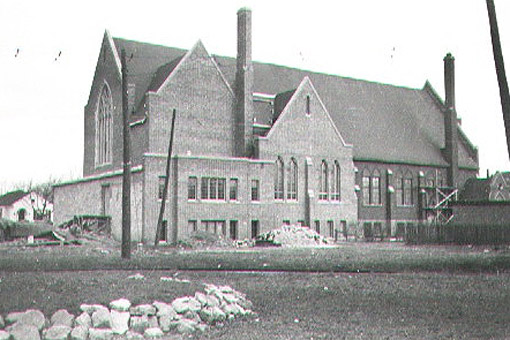
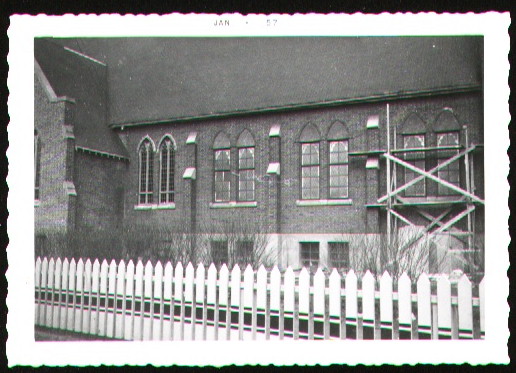
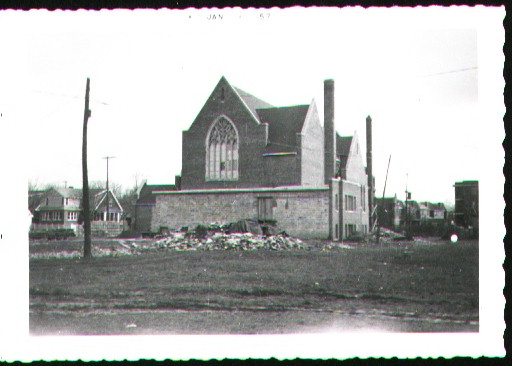
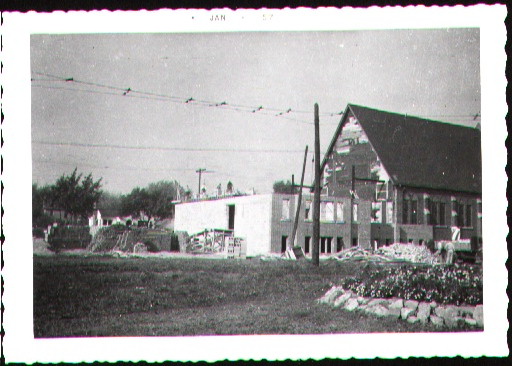
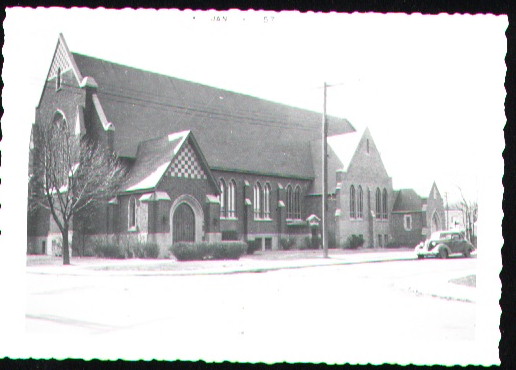
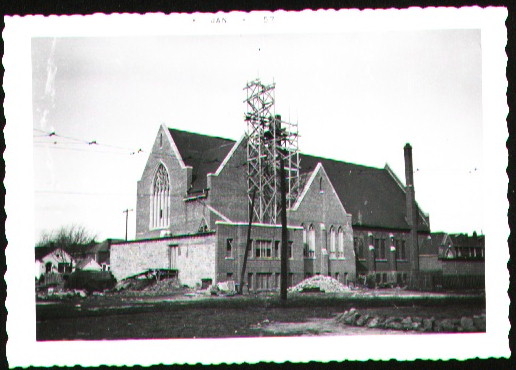
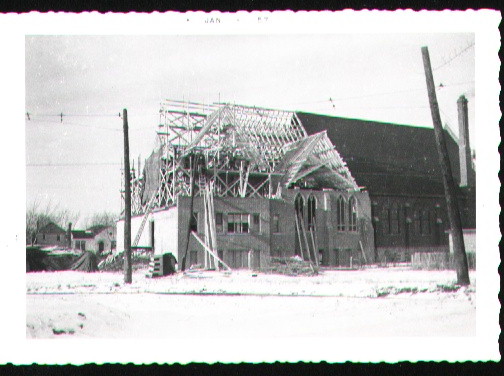
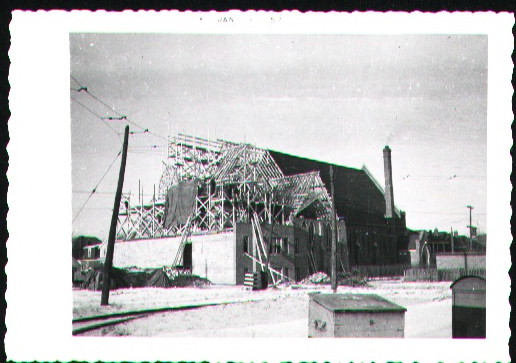
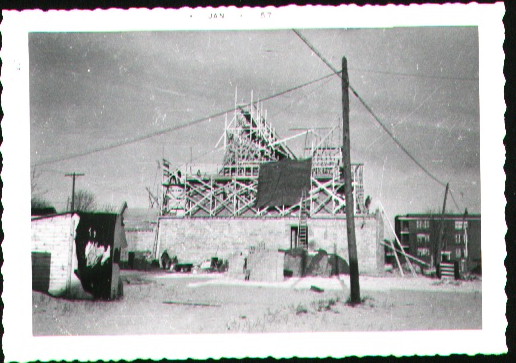
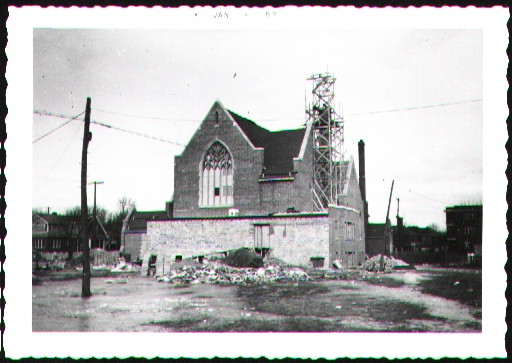
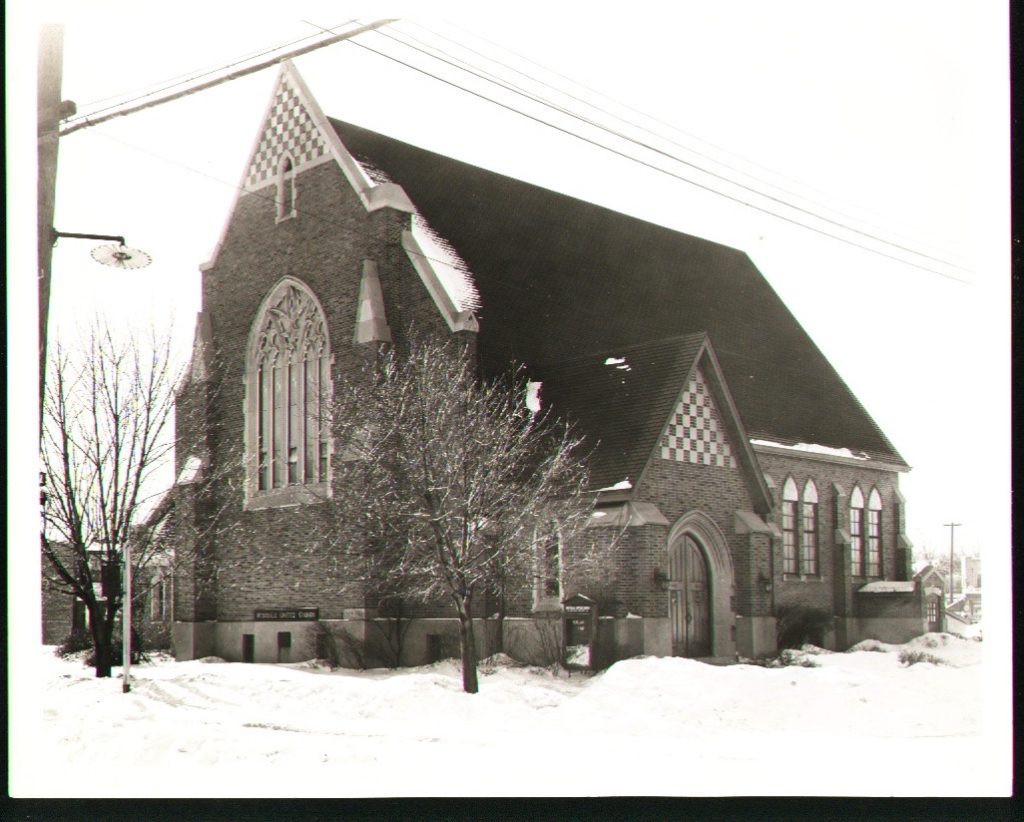
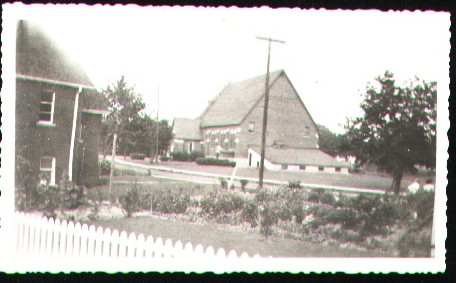
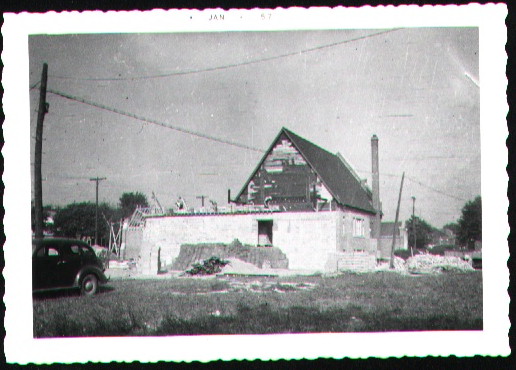
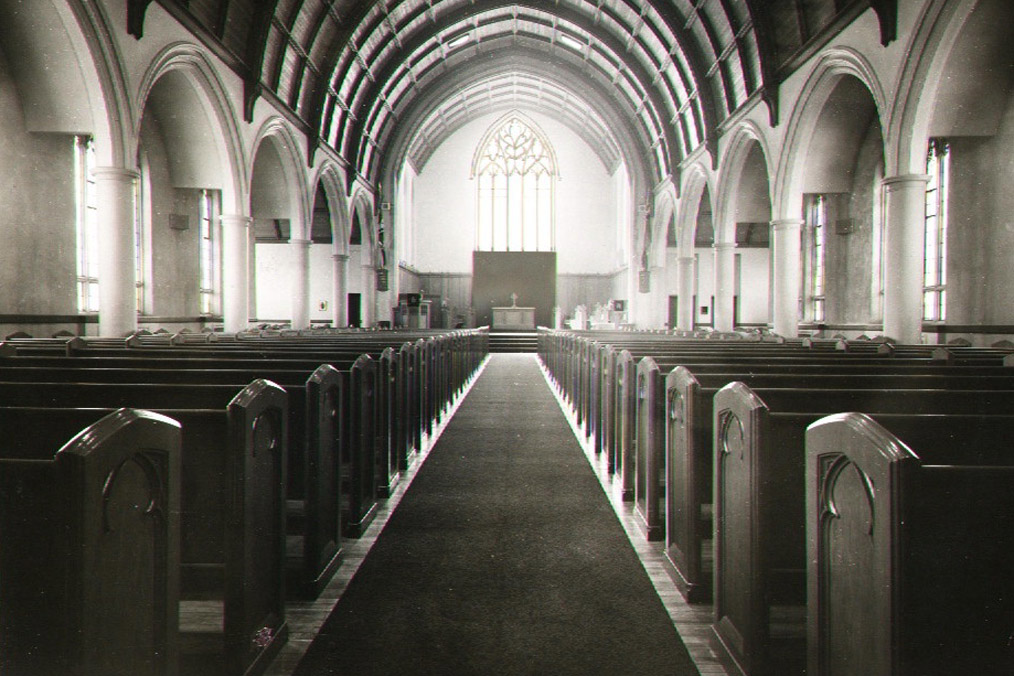
Westdale United Church circa 1944. (Retrieved from the Hamilton Public Library Local History & Archives) Original source: http://preview.hpl.ca:8080/Sites/#1699245691825_10
OUR STORY & HERITAGE
Located at 99 North Oval, Westdale United Church has served as an architectural anchor and community gathering place in Hamilton’s historic Westdale neighborhood for nearly a century.
1930: Early Beginnings
-
- Established in 1930 following the 1925 creation of the United Church of Canada.
- Founded to support the newly developing master-planned Westdale community and the influx of families following McMaster University’s move to Hamilton.
- The original church structure was dedicated on September 7, 1930, serving as a functional place of worship while long-term construction plans were developed.
1948: Architectural Completion
-
- Designers: Prominent church architects F. Bruce Brown and Ross Brisley were commissioned to expand the original structure.
- Architecture: Traditional English-inspired Gothic Revival style, featuring solid stone construction, a square front tower, pointed-arch windows, and balanced positioning along North Oval.
- Sanctuary Features: Built with high barrel-vaulted wooden ceilings, classic nave arches, traditional wooden pews, and an elevated chancel optimized for acoustics.
- Dedication: The completed nave, chancel, and transepts were officially dedicated in 1948.
The Stained Glass Collection
-
- Design Vision: Initiated in the 1950s under Rev. Dr. Thomas R. Davies and planned by Dr. W.T. Morrison Kelly.
- Biblical Narrative: Features a 25-window scheme following a medieval layout. Old Testament themes line one side of the sanctuary, with corresponding New Testament stories on the opposite side, moving clockwise from Creation to the Resurrection.
- Craftsmanship: Executed by prominent Canadian glass artists, including John Ramsden, Edward Low, and Marlene Herbst, utilizing rich colors, symbolism, and lead work.
Modern Evolution & Inclusion
-
- Accessibility: Renovated with barrier-free additions, including exterior elevators, interior lifts, ramps, and accessible washrooms to ensure historic preservation meets modern inclusion standards. Our entire sanctuary-including the chancel-is accessible.
- Community Hub: Functions as an active community space—hosting regional meal programs, concert series, local support networks, and 2SLGBTQIA+ community groups.