

At Westdale United, our use of inclusive language for God is a deeply intentional practice rooted in our theology, our understanding of scripture, and our commitment to radical hospitality. We believe that God is the source of all being—an infinite, divine mystery that transcends human gender categories and binaries. When we limit our language for God exclusively to masculine pronouns or patriarchal imagery (like “He,” “Lord,” or “King”), we inadvertently shrink our understanding of the Divine. By expanding our vocabulary to include a rich tapestry of names—such as Creator, Sustainer, Holy One, Mother, and Source of Life—we allow ourselves to experience a fuller, more vibrant relationship with a God who is too vast to be contained by a single pronoun.
Many English Bibles translate the ancient Hebrew divine name El Shaddai as “God Almighty.” However, Hebrew etymology reveals a deeper layer: the word Shaddai is linguistically connected to the Hebrew root shad, meaning “breast.” In this context, the name carries the connotation of God as a nurturing and sustaining presence—the one who comforts, nourishes, and pours out life-giving care. While the Bible stops short of addressing God with the formal title of “Mother,” it repeatedly insists that God embodies the nurturing, life-giving, and protective qualities that human beings often associate with parental love and care.
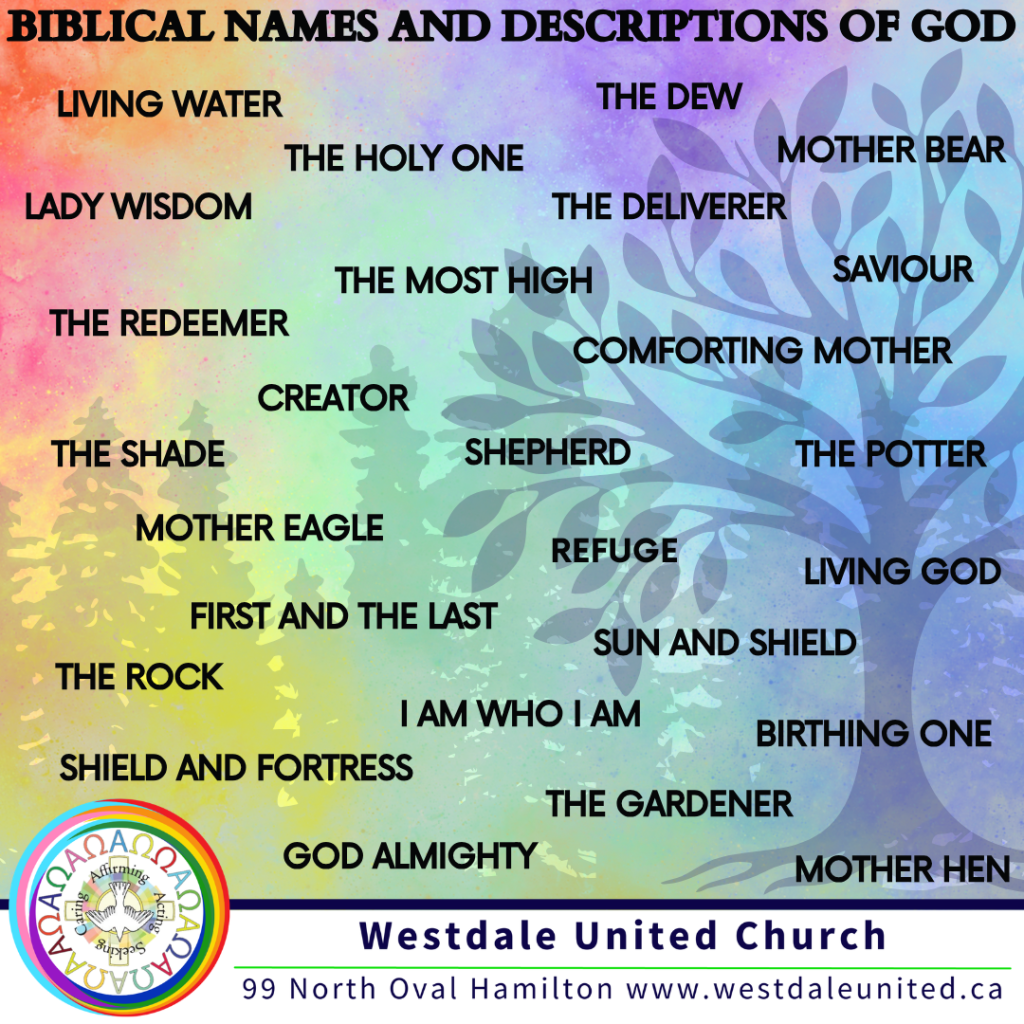
This practice is not a departure from Christian tradition, but rather a deeper dive into it. Throughout the Bible, God is described using a stunning variety of metaphors that go far beyond the masculine. Scripture envisions God as a nursing mother, a protective mother bear, a comforting eagle, a soaring wind, a rock, and the breath of life itself. When we use inclusive language in our worship, hymns, and prayers, we are reclaiming this rich biblical imagination. It allows us to honor the full breadth of the spiritual witness and reminds us that no single human word can ever fully define the sacred.
Finally, language shapes how we treat one another. At Westdale United, we believe that every human being is beautifully made in the image of God. When our language for the Divine is exclusively male, it can subtly reinforce the idea that the masculine is closer to the divine than the feminine or non-binary. Inclusive language is an act of justice and love; it ensures that people of all genders and identities can see themselves reflected in the divine mirror. It is our way of practicing what we preach—creating a truly affirming space where everyone knows they are fully included, fully loved, and fully reflective of the Holy.